
Director's note
I graduated in classic ballet at the end of adolescence after years of study. While it didn’t make me a ballerina, because life took off in a different direction, it at least made me fall in love with any kind of physical expression.
HIt is undeniable that the discipline of classic ballet technique has always fascinated me. I find the same discipline in the Mocidade Independente Samba School drumline, Broadway or (again) in a good performance of Swan Lake.
For a long time I have thought about doing a musical that could review the Brazilian melting pot. I knew that it would be impossible to bring the “Cassino da Urca,” “chanchada” or “tropicalismo” back to life. I have often seen bad art copies brought by globalization. Just trying to copy the culture of “good taste” would only result in something ridiculous, especially for those who like and know dance. 
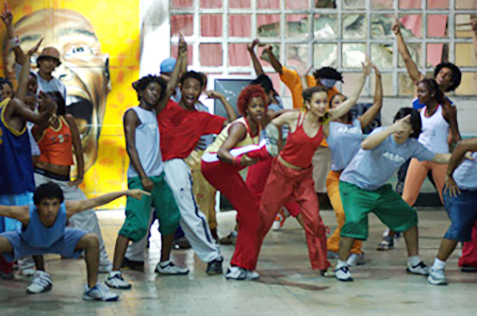
When I saw some recent contemporary dance exhibitions, some of them working with young people from favelas and very successful as entertainment, I again began to think about a Brazilian musical film. The fact that these exhibitions work with our cultural diversity creates dance troupes of all colors, without any worry about uniformity as in traditional shows. This aspect alone would be fascinating, because no one can contest the fact that diversity is fascinating. However, what makes us think deeper is that in order to achieve this diversity, one has to be very disciplined and rigorous. And the result of these two factors is absolutely unique. It is Brazilian.
“Another Love Story” created a dance troupe based on various groups from Rio de Janeiro, working with our ethnic and cultural diversity, but combining the same discipline of a traditional show.
As in my two last works (Brava Gente Brasileira – with Indians – and the movie “Quase Dois Irmãos” - with a Brazilian Drama Group from a favela) I mix the actors’ experiences with the situations we face while writing the script. In this sense, I brought together Paulo Lins (author of “City of God” and co-author of “Almost Brothers”) with the choreographer Graciela Figueroa, a fundamental artist in Brazilian contemporary dance.